

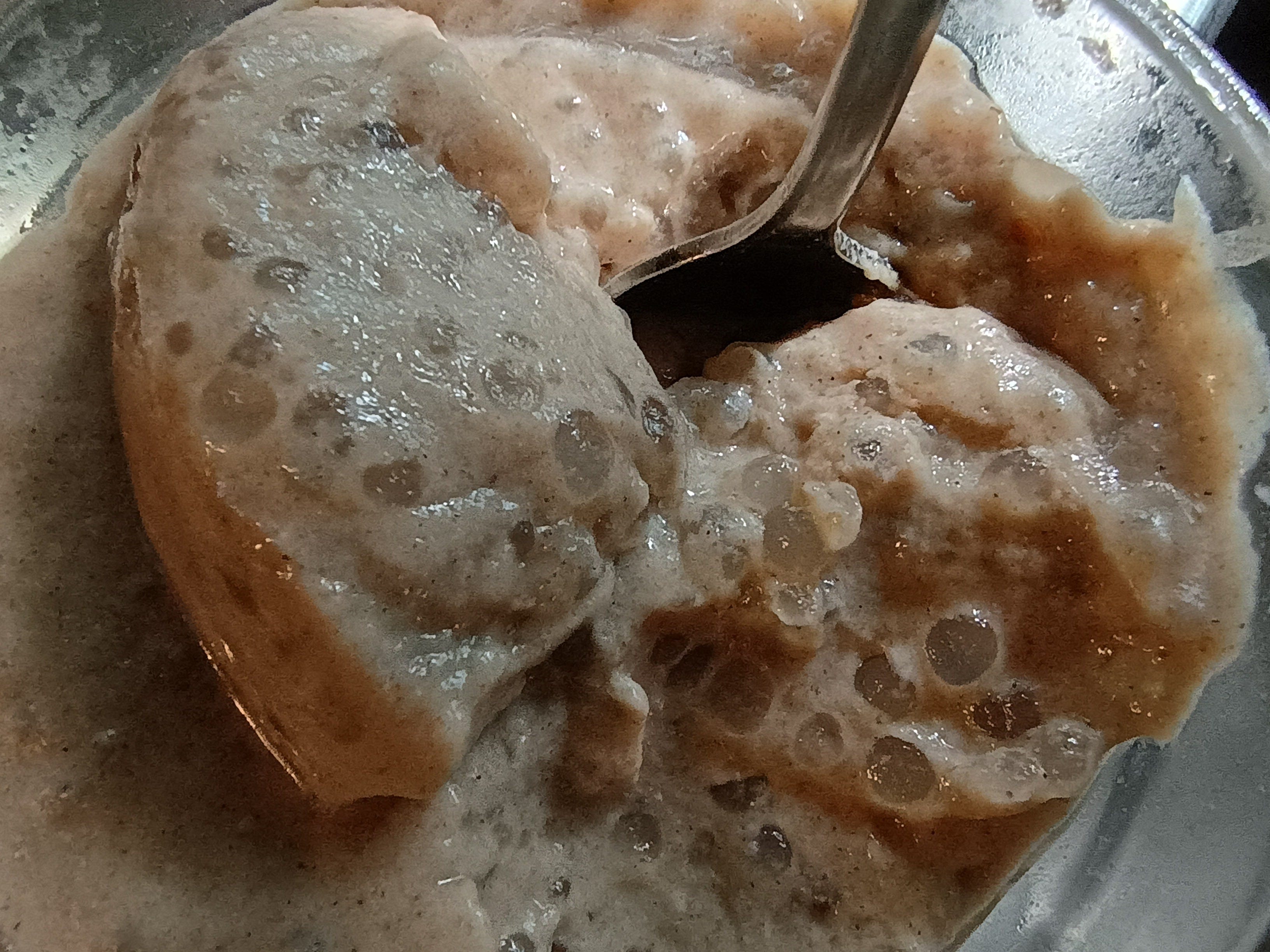
Cricket Pudding? with Ginger for a little more kick.
The cricket flour is optional but having a little may help us make N-acetylglucosamine (NAG) for our sialic acid needs.

The Big Picture: Why Our Cells Need Raw Materials
In my last post, I introduced the concept of conditionally essential nutrients—molecules your body can make, but may not make enough of during chronic illness, aging, or genetic bottlenecks.
One of the most fascinating examples is sialic acid—a sugar that sits on the outside of your cells like a cellular “ID badge.” When sialic acid is polymerized into polysialic acid (PSA) and attached to the neural cell adhesion molecule (NCAM), it acts as a brake on TRPC calcium channels.
When that brake is working:
Calcium stays outside the cell
Cellular signaling is calm and controlled
Inflammation is kept in check
When that brake fails (due to aging, inflammation, or nutrient shortages):
Calcium floods into the cell
This triggers excitotoxicity (cell stress and over-signaling)
Endocannabinoids and inflammatory neurotransmitters are released in excess
The clinical translation: If we’re running low on the building blocks for sialic acid—nucleotides, N-acetylglucosamine (NAG), and the energy to link them together—our cells are essentially driving without brake pads.
The Recipe: A Case Study in Conditionally Essential Nutrition
I like this pudding almost thick enough to eat with your fingers (finger Jello style), but it can be made creamy and soft. It is dairy-free, using coconut oil and sunflower Lecithin for the creaminess. And it is packed with precursors for sialic acid synthesis.
Ingredients (aiming for ~ 6 cups to max 8 cups in a double boiler)
3 cups water (divided)
1/3 cup tapioca pearls (presoak in a cup of water for a few hours to shorten cook time)
1/4 cup arrowroot or tapioca starch (for extra thickening). Presoak tapioca or arrowroot starch for about 15 minutes to change the texture from starchy to smooth. I got in the habit of making a slurry of all/any of the extra thickeners and sugar/sweetener that I use. Half a cup of water is adequate if only the 1/4 cup extra starch is used. More water is needed in this presoak step if more thickeners are being added ~ 1 1/2 cups water is needed if 3/4-1 cup of thickener is being added.
1–2 Tbsp licorice root powder (optional but thickens and is tasty and sweet, DGL form may be medically preferred)
1 Tbsp slippery elm powder (optional but thickens and adds creaminess)
1/4 cup cricket flour (optional but thickens and adds NAG precursor; I use brand name, 3cricketeers.com)
1/4-1/2 cup pumpkin seed flour (optional but thickens, emulsifies and adds protein and zinc)
3 peeled/cored apples, cut into chunks (or pears, or skip the fruit chunks and add an extra 1-2 cups of water)
1/4 cup sugar (or coconut sugar or stevia sweetener)
3 Tbsp coconut oil
1 tsp sunflower lecithin (emulsifier and phosphatidylcholine supplement)
1/2 tsp Himalayan pink salt
Method
In a double boiler, combine presoaked tapioca pearls with 1.5 - 3 cups water and salt. Simmer until pearls become translucent, stirring frequently (they will stick and clump to the bottom—a double boiler helps).
In a separate bowl, whisk together arrowroot or tapioca starch, sugar, cricket flour, slippery elm and licorice root powder and/or pumpkin seed flour. Slowly add 0.5-1.5 cups water (depending on how much extra thickeners are used). Stir until smooth, adding enough water to mix well. Let sit for 15–30 minutes to hydrate.
Add coconut oil, sunflower lecithin, and apple or pear chunks. Continue cooking the tapioca pearls until the pearls are no longer white in color and the fruit is soft.
Add the tapioca or arrowroot starch slurry to the simmering tapioca pearls once the tapioca pearls are translucent (see through and fully cooked). Stir constantly to incorporate the extra thickening slurry.
Remove from heat. (Optional, add ~ 4 drops of Ginger essential oil or two teaspoons of vanilla extract). Spoon or pour into 1/2 or 1 cup containers (glass preferred) and refrigerator. It will continue to thicken as it cools.
How Each Ingredient Can Help Our Health
Let’s break this down. This isn’t a random collection of “superfoods”—each ingredient was chosen to support a specific metabolic bottleneck.
Ingredient: Beneficial nutrients within the food and how the nutrients help us.
Thickeners:
Tapioca pearls + arrowroot or tapioca starch: Resistant starch, quick glucose; Prebiotic—Feeds gut microbiome (which liberates NAG from chitin); glucose = backbone for UDP-GlcNAc (sialic acid precursor). Also gentle for a sensitive gut.
Cricket flour: Chitin → NAG → sialic acid precursor, complete protein, zinc, B12; Direct sialic acid precursor, feeds PSA-NCAM synthesis for TRPC calcium braking; zinc = cofactor for sialyl-transferase enzymes (PST/STX).
Licorice root: Glycyrrhizin, flavonoids; Anti-inflammatory, adrenal support, gut-soothing demulcent—but caution with hypertension.
Pumpkin seed flour: Zinc, magnesium, tryptophan; Zinc is a cofactor for sialyltransferases (PST/STX). Magnesium calms NMDA receptors—counterbalancing calcium excitotoxicity. Tryptophan = serotonin precursor.
Slippery elm powder: Mucilage (polysaccharides)Soothes GI lining—reduces inflammation that might otherwise upregulate TRPC channels systemically. Also a traditional demulcent.
Apples: Pectin fiber, quercetin polyphenol, fructose sugar; Pectin = prebiotic and thickener; quercetin = mast cell stabilizer (autoimmune relevance); fructose = alternative glycosylation substrate.
Salt and Sugar:
Himalayan pink salt or Sea salt: Trace minerals; Electrolyte balance; supports nerve conduction and gastric acid production. Salt supports nerve conduction.
Sugar: Sucrose (glucose + fructose); Glucose = NAG precursor—sugar is the backbone for making UDP-GlcNAc (the sialic acid precursor). Fructose = alternative glycosylation substrate.
Fats/Oils:
Coconut oil: Easily digestible Medium Chain Triglycerides, (MCTs), lauric acid and monounsaturated fats; MCTs bypass bile-dependent absorption (good for malabsorption) and support ketogenesis (neuroprotective against excitotoxicity).
Sunflower lecithin: Phosphatidylcholine; Direct choline source—bypasses common PEMT gene SNPs; PC is the backbone of all cell membranes.
Ginger essential oil: Gingerols, anti-inflammatory COX-2 inhibition, TRPV1 modulation—works in the same pain/inflammation space as TRPC ion channels.
The Cricket Flour Factor: Why Insects?
Cricket flour is a whole-food source of chitin—a polymer of N-acetylglucosamine (NAG).
Here’s the production pathway:
You eat cricket flour.
Your gut microbiome (and a little stomach acid) breaks down chitin into free NAG.
Your liver uses NAG + glucose (from the tapioca/sugar) to synthesize UDP-GlcNAc.
UDP-GlcNAc is the direct donor for sialic acid production.
Sialic acid is polymerized into PSA and attached to NCAM.
PSA-NCAM keeps TRPC calcium channels closed.
Translation: Eating crickets supports our cellular “brake pads” (sialic acid production) for calcium regulation.
Why not just take a supplement? Because whole-food chitin comes with a complete nutrient matrix—zinc, B12, protein, and trace minerals that support the enzymes doing the work. Plus, I’d rather eat pudding than swallow another pill.
Two Important Clinical Cautions
Health risks to consider:
Licorice root: Glycyrrhizin can raise blood pressure and lower potassium at high/daily doses. Use occasionally, not daily. For daily use, choose deglycyrrhizinated licorice (DGL) although the natural form may be helpful for ‘adrenal fatigue’.
Cricket flour allergy may be a risk: Cross-reactivity with shellfish and dust mite allergies may occur. Start with 1 tsp per serving if new to insects and evaluate for symptoms over the next day or two. Discontinue if GI upset or allergic symptoms occur.
Ginger essential oil is potent—internally, therapeutic dose is typically 1–2 drops diluted in other oils (culinary grade, not aromatherapy grade). More is not better as it may irritate our GI mucosa.
And yes—no one really wants insects in their food and too much chitin may be a health negative. I get it. That’s why I use just ~ 1/4-1/3 cup cricket flour in a batch that makes six or more servings (about 1 tablespoon per serving). The cricket flour provides a precursor (chitin) for our own production of beneficial N-acetylglucosamine (NAG). Too much chitin is not better though. The flavor of the toasted cricket flour blends into the background, and the dark color makes it look like a chocolate pudding. I’m not eating bugs as much as enjoying a creamy nutrient-dense dessert that happens to have a secret ingredient that can help gut health.
The Takeaway
This recipe isn’t magic. It’s not a cure. It’s a whole-food delivery system for raw materials your stressed cells may be begging for.
If you’re dealing with chronic inflammation, autoimmune conditions, or simply want to support your nervous system’s calcium regulation, consider:
Diversifying your glycans (cricket flour, mushrooms, wakame)
Supporting your methylation pathways (lecithin, choline-rich foods)
Feeding your gut microbiome (prebiotic starches like tapioca, apples)
Reducing systemic inflammation (coconut oil, licorice, anti-inflammatory spices)
And sometimes, that looks like a bowl of thick, sweet, finger-Jello pudding.
References
Amores-Bonet, L., et al. (2022). NCAM and polysialic acid modulate TRPC channels. [Journal details].
Angata, K., et al. (1997). Polysialyltransferases STX and PST are expressed distinctly in tissues. [Journal details].
Nakayama, J., et al. (1998). Polysialic acid synthesis on NCAM. [Journal details].
Rawal, S., & Zhao, X. (2021). Sialic acid biosynthesis in health and disease. [Journal details].
Salvatore, S., et al. (2000). NAG in inflammatory bowel disease. [Journal details].
Amadi, B., et al. (2009). NAG in edematous malnutrition. [Journal details].
If you found this post useful:
Subscribe for more deep dives on conditionally essential nutrients.
Comment below—have you tried cricket flour? What’s your favorite way to use it?
Share this with a colleague who needs to see that “cellular communication” and resistant starch can be delicious.
Disclaimer: This information is being provided for educational purposes within the guidelines of Fair Use and is not intended to provide individual health care guidance.
Google says I can boost "sialic acid production" eating eggs and dairy. Can't get over the idea of eating crickets. Sorry. But I'm glad that boba tea sounds like it's good for me now.